Where the Light Decides to Stop
Dimly’s visual language is a practice of restraint: light, texture, movement, and the quiet distance between them.
 Dimly team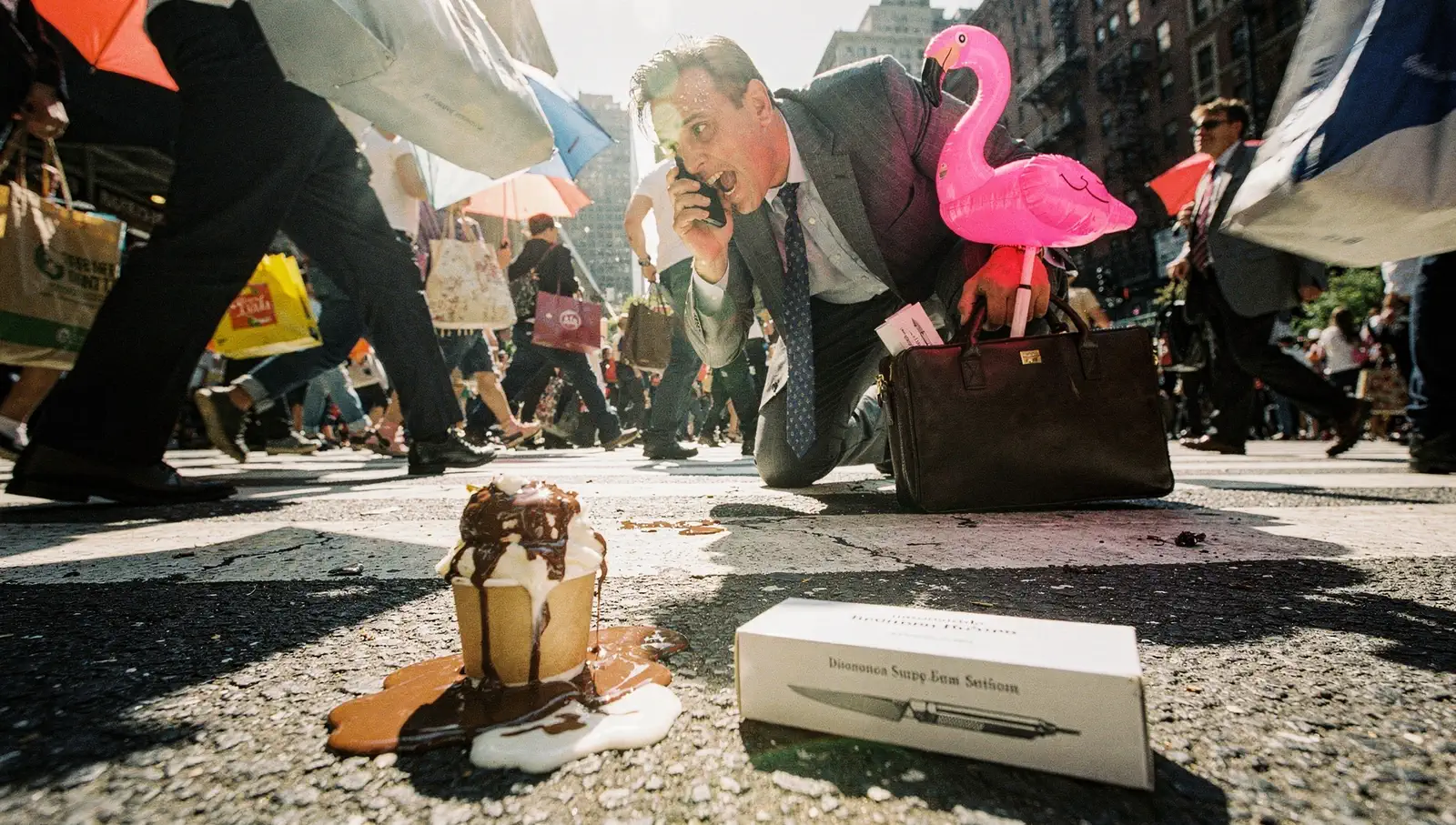
The street is crowded. Close to the pavement, a patch of pink appears among the shoes. Sunlight catches it. We see that colour first, then the rest of the street.
Light with somewhere to go
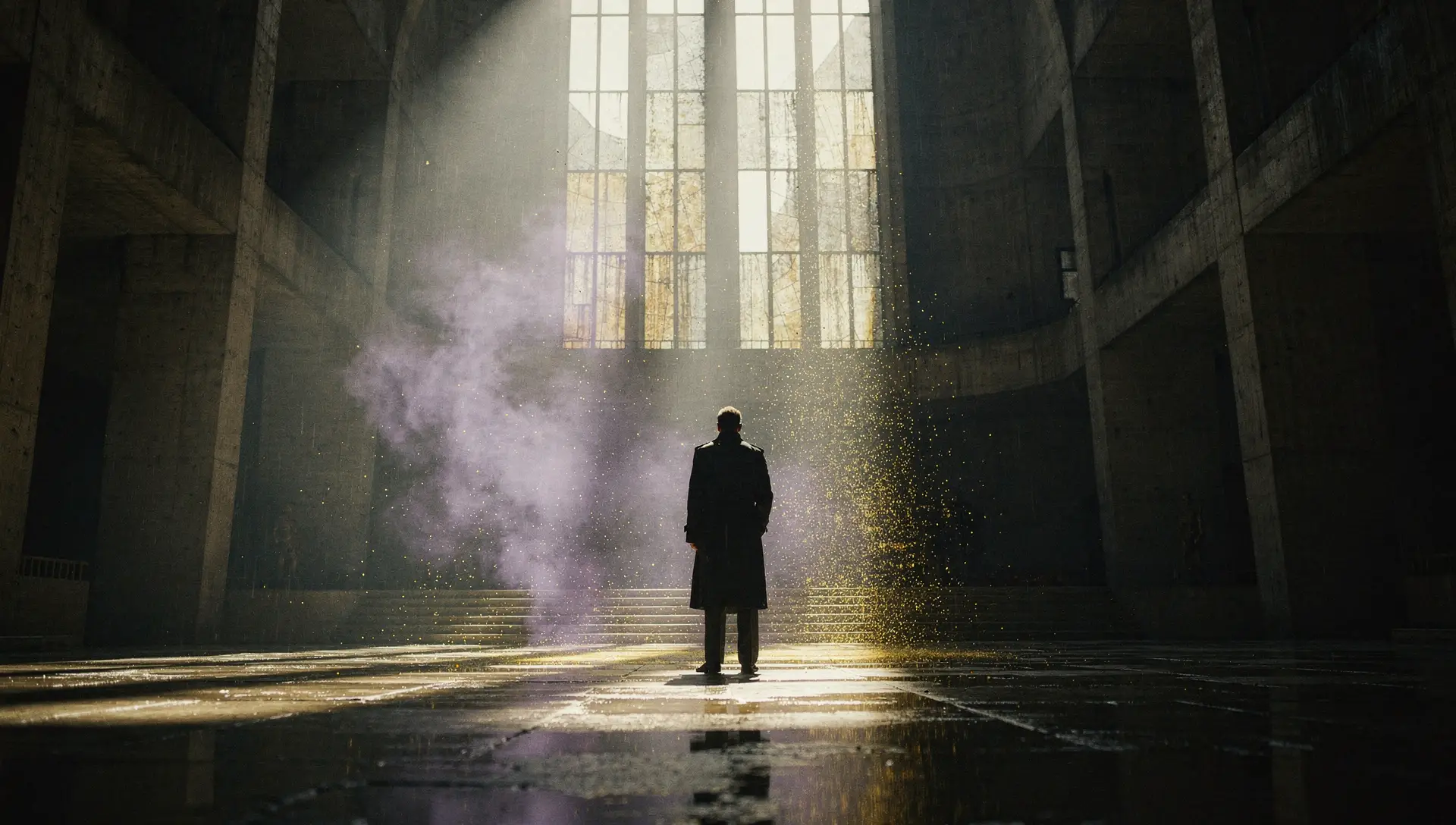
Light enters through a high window. A stretch of smoke brightens. Light falls on the concrete, then reflects onto a cheek. Behind a column, the wall stays dark. A crack appears and fades as the smoke moves.
We look for this light when we arrange a Dimly scene. Pavement after rain, dust above a stair, an open door can hold the eye. A person walks in. Half a shoulder brightens, then passes back into shadow.
Grain you can see
Look closer and there is grain in the darker parts of the picture. Haze passes through; a distant window edge softens. The camera approaches a sleeve, and the weave of the cloth comes into view.
We like to keep these traces. They suggest damp air, a rough wall, the weight of clothing against skin. Someone draws a hand into a sleeve against the cold. The cuff brushes their chin. The picture begins to feel familiar.
Stay with a person
A woman stands by a window. The singing grows quieter and the camera moves a little closer. She lifts her head. The camera stops. Farther away, someone passes between two columns.
We watch these movements with the song playing. As the drums gather, the camera might draw nearer. At the end of a line, the picture might hold for half a beat. The pace takes shape through these small choices.
A colour is a neighbour
Violet smoke enters a room and the pale yellow wall feels warmer. Blue changes beside rust, then changes again beside skin. Grey clouds gather overhead. The pavement darkens with them.
We often keep a few colours together: grey concrete, old copper, pale yellow window light. Then we bring one bright object into the scene and let it pass through the frame. When the chorus arrives, that colour is still there.
The cut leaves a trace
In the distance, someone raises a hand. Cut closer: fingers touch a collar. From the side, the same window light falls across the coat. Three shots follow one gesture to its end.
We check these small things in the edit. Which side the light comes from. Where the hand rests. How a movement carries from one frame into the next. The viewer follows them through the music.
Make room for the ear
The picture darkens. A line of light remains outside the window. The person has left the frame; the voice lingers. A little later, the last vibration of a string fades too.
We often let a picture rest here. The last few seconds belong to the ear.